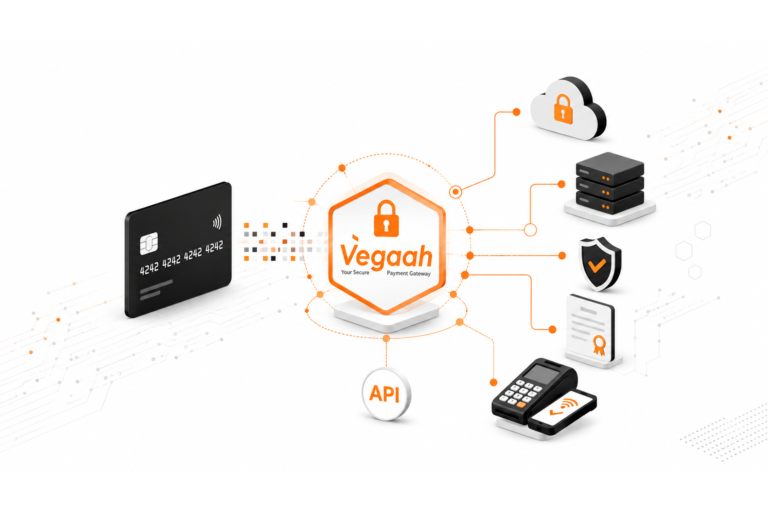
Learn why online payments fail and how to reduce payment failures to improve checkout success rates and increase e-commerce conversions.
The checkout stage is where intent turns into revenue, yet it’s also where many e-commerce businesses lose sales. Ecommerce payment failures are a silent revenue killer, often occurring after the customer has already decided to make a purchase.
Industry data shows that 5–10% of online transactions fail, and payment-related issues account for over 20% of cart abandonment globally.
As digital payments grow, e-commerce payment failures are rising due to bank declines, authentication issues, network errors, and poorly optimised checkout flows.
Each failed transaction doesn’t just impact revenue; it weakens customer trust and pushes buyers toward competitors.
The good news? Most payment failures are preventable. By understanding why online payments fail and addressing gaps across checkout and payment gateways, businesses can quickly reduce failures and see an immediate uplift in conversion rates.
The Real Impact of Payment Failures on E-Commerce Growth
Every failed online transaction is a direct loss of revenue, often at the moment when the customer is most likely to make a purchase.
Unlike low traffic or product drop-offs, payment failures happen after acquisition costs have already been spent, making them one of the most expensive issues for e-commerce businesses.
Checkout payment failure is also a major driver of cart abandonment. When a payment fails, customers rarely retry immediately.
Many abandon the cart altogether or switch to a competitor with a smoother checkout experience, resulting in increased drop-offs at the final step of the purchase journey.
This is where the payment failure rate becomes critical. Even a small increase, say from 4% to 6%, can translate into thousands of lost transactions at scale.
Conversely, reducing payment failures by just 1–2% can unlock a significant uplift in revenue and help reduce cart abandonment without increasing marketing spend.
Why Online Payments Fail: Understanding the Root Causes
Most payment failures are preventable if you know where they originate.
In many cases, failures don’t happen because customers abandon intent, but because something breaks in the payment ecosystem at the last moment.
Understanding why online payments fail is the first step toward fixing them.
Common Payment Failure Reasons in E-Commerce
Some of the most frequent online payment failure reasons include:
- Bank declines & issuer restrictions
Transactions may be declined due to risk controls, spending limits, or temporary issuer-side blocks. - OTP failures & authentication timeouts
Delayed or missed OTPs, incorrect entry, or session expiry often cause payments to fail mid-checkout. - Network or connectivity issues
Poor internet connectivity or network latency can interrupt payment processing, especially on mobile. - Insufficient funds or expired cards
Simple but common issues that still account for a large share of failed online transactions. - Technical glitches at checkout
Broken redirects, page reloads, or session mismatches can disrupt the payment flow.
These common payment failure reasons collectively increase failure rates and hurt conversions.
Payment Gateway Issues That Increase Failure Rates
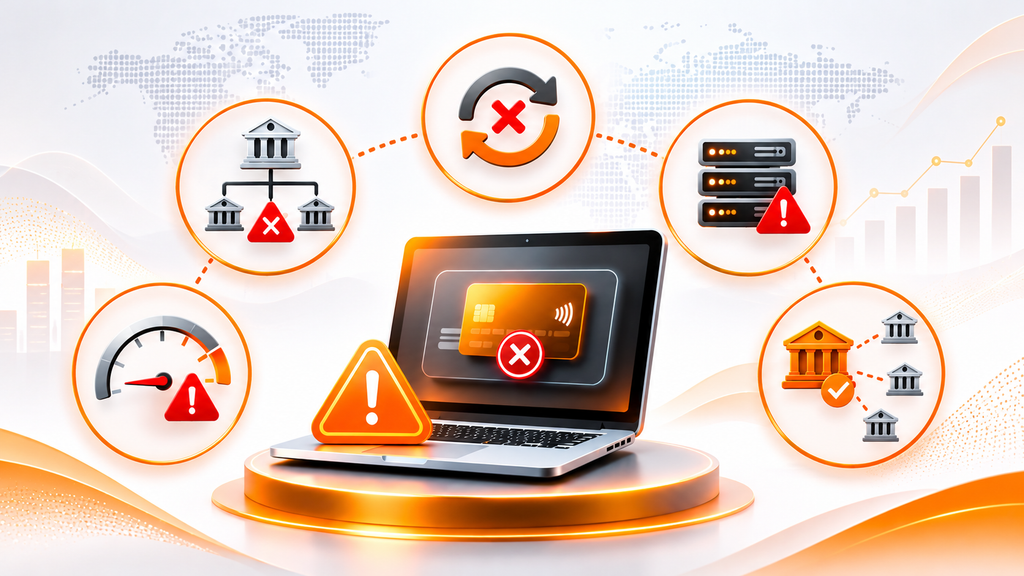
While customer and bank-related factors play a role, many payment failures originate from underlying payment gateway issues.
When the gateway infrastructure isn’t optimised for scale, speed, and resilience, even valid transactions can fail, directly increasing the payment failure rate.
- Slow response time from the gateway
Delayed responses can lead to timeouts during authentication or authorization, causing transactions to fail even when customers have sufficient funds. - Single bank dependency
Relying on one acquiring bank creates a single point of failure. If that bank faces downtime or higher decline rates, transactions are rejected unnecessarily. - Poor retry logic
Without intelligent retries, temporary failures, such as network hiccups or issuer delays, result in permanent transaction failures. - Downtime or server instability
Even short outages during peak hours can cause a spike in failed payments and abandoned checkouts. - Lack of smart routing
Gateways that don’t route transactions dynamically to the best-performing bank miss opportunities to maximise success rates.
Addressing these payment gateway issues is critical for lowering the payment failure rate and ensuring a smoother, more reliable checkout experience.
This is where Vegaah makes a difference.
Vegaah is built to tackle core payment gateway issues with smart routing, intelligent retry mechanisms, high-availability infrastructure, and real-time monitoring.
This helps businesses lower payment failure rates, minimise checkout disruptions, and ensure a consistently reliable payment experience.
How Checkout Payment Failures Drive Cart Abandonment
A checkout payment failure introduces friction at the most critical moment of the purchase journey, when the customer is ready to convert.
Psychologically, this last-step disruption breaks momentum and creates doubt, often leading customers to abandon the purchase instead of retrying.
- Industry data over the last few years shows that cart abandonment rates have consistently remained between 70–75% globally, with payment-related issues contributing to 20–25% of these abandonments.
- In fact, failed or declined payments are now one of the top three reasons customers drop off at checkout.
- The impact is even stronger on mobile users. Mobile commerce accounts for over 60% of e-commerce traffic, yet mobile checkout abandonment rates are 10–15% higher than desktop, largely due to OTP delays, network instability, and interrupted payment flows.
- Most importantly, customers rarely retry after a failed payment.
- Studies indicate that nearly 60% of users do not attempt the payment again once it fails, choosing instead to exit or switch to a competitor.
This makes checkout payment failures a critical lever to fix for businesses aiming to reduce cart abandonment and recover lost revenue.
Proven Payment Failure Solutions for E-Commerce Businesses

Reducing payment failures isn’t about more discounts; it’s about better payments.
The most effective way to improve conversions is to fix what breaks at checkout and ensure every valid transaction has the highest chance of success.
Smart Payment Routing
Routing transactions across multiple acquiring banks increases approval rates and avoids single-point failures.
When one bank underperforms or faces downtime, payments are automatically redirected to higher-performing banks, resulting in higher success rates and fewer failed transactions.
Intelligent Retry Mechanisms
Not all failures are final. Auto-retry for failed online transactions helps recover payments impacted by temporary issues such as network latency or issuer delays.
Intelligent retries happen in the background, reducing customer friction while improving overall completion rates.
Faster & Simplified Checkout Experience
A long or complex checkout increases the likelihood of errors and drop-offs.
Fewer steps, faster authentication, and cleaner payment flows significantly reduce failures caused by timeouts, incorrect inputs, or session expiry.
Real-Time Monitoring & Alerts
Proactive monitoring enables businesses to identify spikes in failures instantly.
Real-time alerts help teams fix issues, bank outages, gateway slowdowns, or authentication errors before customers start abandoning carts.
Together, these payment failure solutions help businesses consistently reduce payment failures, improve checkout reliability, and unlock measurable conversion growth.
How Reducing Payment Failures Directly Increases Conversion Rates
Every successful payment reinforces customer trust.
When payments go through smoothly, customers feel confident in the brand, the checkout experience, and the security of the transaction.
A consistently high payment success rate reduces hesitation, increases satisfaction, and encourages repeat purchases, turning first-time buyers into loyal customers.
From a business perspective, reducing e-commerce payment failures delivers immediate ROI.
Fewer failed transactions mean more completed orders without increasing marketing spend.
Instead of spending more to acquire new users, businesses simply convert a higher percentage of existing traffic, making growth more efficient and sustainable.
The impact is measurable. Merchants that reduce payment failures typically see:
- Higher payment success rates
- Fewer checkout drop-offs
- Lower cart abandonment
- A clear uplift in overall sales
Even a modest improvement in payment success of just 1–2%, can significantly increase ecommerce conversion rate at scale, especially for high-volume businesses.
What to Look for in a Payment Gateway to Reduce Failures
Choosing the right payment partner is critical to overcoming payment gateway issues and implementing long-term payment failure solutions.
Not all gateways are built to handle scale, complexity, and peak traffic reliably, so merchants must look beyond basic transaction processing.
- High payment success rate
A strong gateway consistently delivers higher approvals across cards, UPI, and other payment modes, even during peak volumes. - Multi-bank support
Access to multiple acquiring banks reduces dependency on a single network and improves resilience against bank-side declines or outages. - Advanced failure analytics
Detailed insights into decline reasons, failure patterns, and bank performance help businesses identify gaps and optimise payment flows proactively. - Minimal checkout friction
Fast response times, fewer redirects, and smooth authentication reduce timeouts and customer drop-offs at checkout.
A payment gateway that combines these capabilities doesn’t just process payments; it actively reduces failures and protects conversions.
Payment failures slow growth by causing lost revenue, higher cart abandonment, and broken trust at checkout. Even small failure rates can translate into significant losses at scale.
With the right strategy and gateway, businesses can reduce payment failures quickly and recover missed conversions.
This is where Vegaah helps by improving payment success rates, reducing checkout friction, and tackling cart abandonment at the source.
Turn failed payments into completed orders. Power your checkout with Vegaah.
Contact today to learn more.
FAQs
Why do online payments fail frequently?
Due to bank declines, authentication issues, network problems, and payment gateway limitations.
What is a good payment failure rate for e-commerce?
Typically below 5%. Anything higher indicates optimisation gaps.
How can I reduce checkout payment failures?
Use smart routing, retries, faster checkout flows, and reliable gateways.
Do payment gateways affect conversion rates?
Yes. Gateway performance directly impacts payment success and checkout completion.
What are the most common payment failure reasons in e-commerce?
The most common payment failure reasons include bank declines, OTP failures and authentication timeouts, network issues, insufficient funds or expired cards, and technical glitches at checkout.
How does smart routing help reduce payment failures?
Smart routing sends each transaction to the best-performing acquiring bank and redirects payments away from banks that are down or declining more often. This helps reduce payment failures caused by single bank dependency and improves approval rates.
How can businesses reduce cart abandonment caused by failed payments?
Fix payment gateway issues, add intelligent retries, simplify the checkout flow, and monitor failures in real time. Together, these steps help reduce cart abandonment and increase ecommerce conversion rate.