Learn how payment gateways protect digital transactions with encryption, tokenization, PCI DSS compliance, and AI-based fraud detection, and explore key payment gateway security layers that ensure safe, seamless online payments.
In today’s digital-first world, every tap, swipe, or click fuels the global economy. Digital payments have transformed how we shop, bank, and do business, making convenience the new normal. But behind every smooth transaction lies an invisible promise: security. It’s the foundation of user trust and the backbone of business growth. Without it, even the most advanced payment system can crumble.
According to government data, digital financial frauds in India totaled ₹4,245 crore in the first 10 months of FY 2024–25, across 2.4 million incidents. This represents a 67% increase compared to earlier years.
Ever wondered what makes online payments feel so seamless, yet so secure? Let’s discover
in this article.
The Role of a Payment Gateway
A payment gateway is a secure technology that enables online payments between a customer and a merchant. It’s what makes it possible for you to pay with a card, wallet, or UPI in just a few clicks.
Acting as a digital bridge, it connects the customer, merchant, and bank, verifying payment details, authorizing the transaction, and ensuring funds move safely from one account to another.
In essence, a payment gateway has two core responsibilities:
- Convenience: Making transactions fast, simple, and seamless.
- Protection: Safeguarding sensitive data and preventing fraud at every step.
Common Security Threats in Online Payments
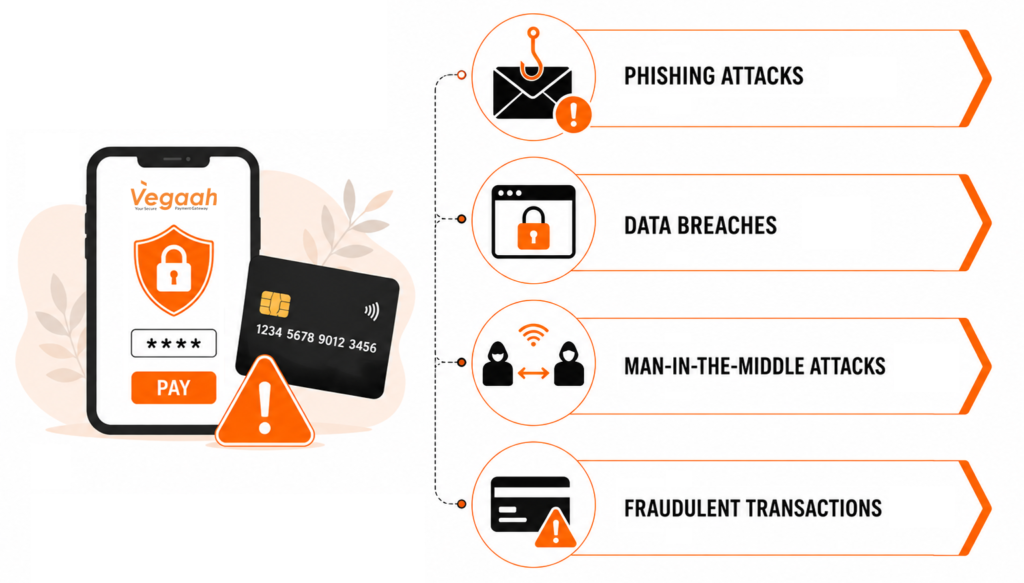
As digital payments grow, so do the risks that come with them. Cybercriminals are constantly evolving their methods to exploit vulnerabilities in online transactions.
Some of the most common threats include:
- Phishing Attacks: Fraudulent emails or websites trick users into sharing sensitive details like card numbers or OTPs
- Data Breaches: Hackers target databases to steal stored financial or personal information.
- Man-in-the-Middle Attacks: Cybercriminals intercept data during transmission between the user and the payment server.
- Fraudulent Transactions: Unauthorized purchases made using stolen credentials or compromised accounts.
These threats highlight why robust payment gateway security is non-negotiable. A secure gateway doesn’t just process payments; it protects customers’ trust and shields businesses from financial and reputational damage.
Key Security Measures Used by Payment Gateways
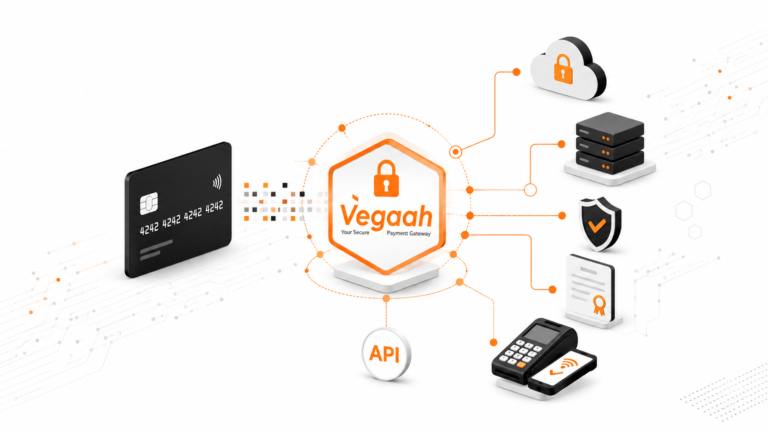
To ensure every transaction is protected from cyber threats, payment gateways use multiple layers of advanced security.
Here, payment gateway security measures play a vital role in keeping customer and business data safe.
a. Data Encryption
Encryption ensures that sensitive information like card numbers and personal details is converted into unreadable code during transmission.
By using SSL (Secure Socket Layer) and TLS (Transport Layer Security) protocols, gateways create a secure channel between the customer, merchant, and bank, preventing hackers from intercepting or decoding the data.
b. Tokenization
Tokenization replaces real card details with a unique, random “token.” This token holds no actual value outside the specific transaction or system.
Think of it like this: your card number becomes a secret code that’s useless to hackers, even if intercepted.
c. PCI DSS Compliance
Payment gateways must adhere to Payment Card Industry Data Security Standards (PCIDSS), a globally recognized framework for handling and storing payment data.
This compliance ensures that gateways follow strict protocols for encryption, access control, and monitoring, maintaining the highest level of transaction security. These payment gateway security standards form the baseline every compliant business must meet.
d. Two-Factor Authentication (2FA)
2FA adds an extra step of verification before approving payments. Beyond entering card details, users must confirm their identity through an OTP, biometric scan, or PIN.
This additional layer significantly reduces the risk of unauthorized access, even if basic credentials are compromised.
e. Fraud Detection Systems
Modern gateways use AI and machine learning to continuously analyze transaction patterns and user behavior.
| Security Layer | What It Does | Why It Matters for Security |
|---|---|---|
| Data Encryption (SSL/TLS) | Converts sensitive data into unreadable code during transmission | Prevents hackers from intercepting or decoding payment information |
| Tokenization | Replaces card details with unique, random tokens | Even if intercepted, the data is useless, reducing the risk of card theft |
| PCI DSS Compliance | Ensures the gateway follows global security standards for handling payment data | Protects businesses from breaches, legal penalties, and non-compliance risks |
| Two-Factor Authentication (2FA) | Adds an extra verification step, like OTP or biometrics | Blocks unauthorized users even if passwords or card details are compromised |
| AI-Based Fraud Detection | Monitors transactions in real time to flag anomalies | Prevents fraudulent transactions before they occur and reduces chargebacks |
These intelligent systems can flag unusual activities, such as multiple failed attempts or sudden location changes in real time, helping prevent fraud before it happens.
How Businesses Benefit from Secure Payment Gateways
A secure payment gateway does more than protect transactions, it helps businesses grow with confidence.
In the 2025s Global eCommerce Payments & Fraud Report, 98% of merchants reported experiencing at least one type of fraud in the past 12 months.
Among the most common fraud types globally are real-time payment fraud, refund abuse, phishing, and card testing.
With fraud rising across every digital channel, payment gateway security is no longer an optional layer. It’s a core foundation of business continuity, customer trust, and long-term growth.
Here’s how it shields your business:
- Builds Customer Trust and Brand Reputation: When customers know their data is safe, they’re more likely to complete purchases and return. Security creates loyalty.
- Reduces Fraud and Chargebacks: Advanced fraud detection and encryption minimize financial losses and operational headaches caused by disputes.
- Ensures Global Compliance and Smooth Operations: Adhering to security standards like PCI DSS allows businesses to accept payments worldwide without risking regulatory penalties.
The Future of Payment Security
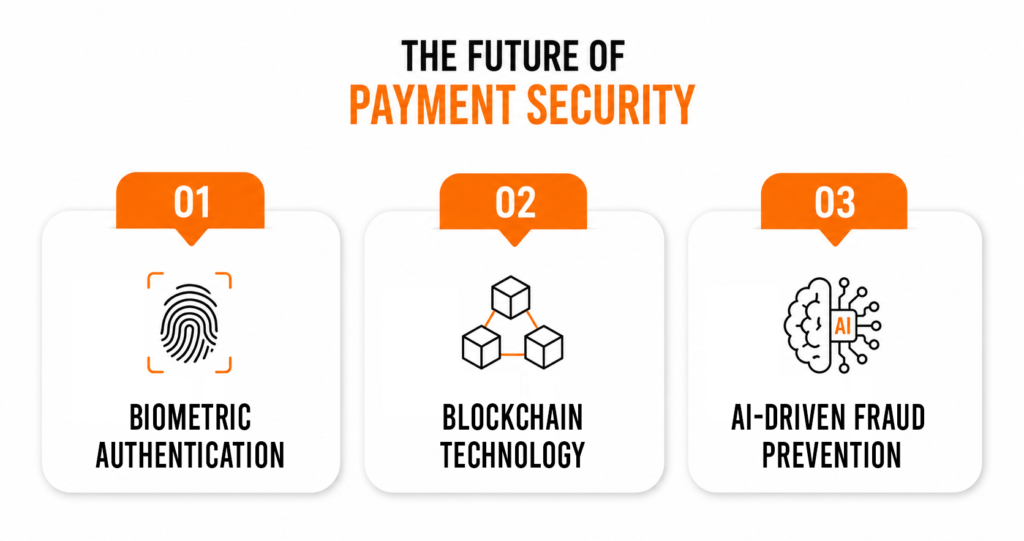
As digital transactions become faster and more widespread, payment gateway security continues to evolve to outpace sophisticated cyber threats.
Emerging technologies are reshaping how gateways protect every payment.
- Biometric Authentication: Fingerprints, facial recognition, and voice IDs are adding a new level of personalized security, making fraud nearly impossible to replicate.
- Blockchain Technology: With its decentralized and tamper-proof nature, blockchain offers transparent, traceable, and secure transaction records, minimizing the risk of data manipulation.
- AI-Driven Fraud Prevention: Artificial intelligence and machine learning are becoming the front line of defense, detecting anomalies in real time and adapting to new fraud patterns faster than ever before.
Payment gateways are no longer just processors, they’re becoming intelligent security ecosystems. Through continuous innovation and stronger payment gateway security measures, they ensure digital payments remain seamless, trusted, and future-ready.
As digital payments continue to power modern commerce, security remains the single most crucial factor that protects businesses and customers alike.
From encryption and tokenization to AI-led monitoring and biometric verification, each security layer plays a vital part in keeping transactions safe in an increasingly complex threat landscape.
Vegaah brings all these protections together under one unified, future-ready payment gateway.
With end-to-end encryption, robust tokenization, strict PCI DSS compliance, intelligent AI- driven fraud detection, and seamless 2FA support, Vegaah ensures every transaction is processed with maximum security and minimal friction.
In a world where trust drives every digital interaction, Vegaah empowers businesses with the confidence to grow securely, one safe transaction at a time.
Connect today to learn more.
FAQs
How secure are payment gateways?
Payment gateways are highly secure when properly implemented. They rely on industry standards like SSL/TLS encryption, tokenization, PCI-DSS compliance, 2FA, and continuous fraud monitoring to protect data and transactions.
How do digital payment systems enhance security for users?
Digital payment systems protect users by encrypting data in transit, replacing card details with tokens, enforcing multi-factor/biometric authentication, and using AI/behavioral analytics to flag suspicious activity in real-time, all of which reduce exposure to theft and unauthorized use.
Which country is no 1 in digital payments?
India is one of the leading countries in digital payments, with a daily average of 640 million transactions.
How does a secure gateway work?
A gateway securely captures customer payment data, encrypts it (SSL/TLS), forwards it to the acquiring bank/payment processor for authorization, receives the approval/decline, and passes the result to the merchant, while logging and tokenizing data for safety and settlement.
What are the types of payment gateways?
Common types include hosted/redirect gateways (customer pays on the provider’s page), integrated/API gateways (merchant collects card details via API), virtual terminals (manual entry for phone/mail orders), and omnichannel/local gateways that support in-store, mobile, and region-specific rails. Choice depends on UX, risk tolerance, and compliance needs.