
Protect your online store with an e-commerce fraud prevention checklist covering detection, chargebacks, and secure payments with Vegaah.
E-commerce fraud continues to rise in tandem with the growth of digital payments.
Global e-commerce fraud losses are estimated to cost merchants tens of billions of dollars annually, with card-not-present (CNP) fraud accounting for the majority of incidents.
At the same time, chargebacks remain a critical risk. Card networks typically flag merchants once chargeback ratios cross 0.9–1%, leading to higher processing fees, penalties, or even account termination.
For online businesses, the impact goes beyond direct revenue loss.
Fraud leads to lost inventory, operational overheads, higher decline rates, and damaged customer trust.
Manual reviews and reactive controls are no longer effective against sophisticated, fast-moving fraud tactics.
This is why a structured ecommerce fraud prevention checklist is essential. Successful fraud prevention for e-commerce requires a proactive, layered approach that combines secure checkout controls, real-time transaction monitoring, intelligent risk scoring, and effective chargeback management.
A checklist-driven strategy helps merchants systematically reduce fraud exposure while maintaining smooth customer experiences and healthy conversion rates.
In this blog, we break down the essential steps every e-commerce brand should implement to stay ahead of fraud while continuing to scale with confidence.
Understanding E-commerce Fraud: Common Threats Online Stores Face
To understand how to prevent fraud in ecommerce, brands must first recognise the different fraud vectors that impact online transactions.
Modern fraud is no longer limited to stolen cards, it spans customer behaviour, account misuse, automation, and post-transaction abuse.
Effective fraud management for online stores starts with identifying these threats early and addressing them systematically.
Common types of e-commerce fraud include:
- Card-Not-Present (CNP) Fraud
Occurs when stolen card details are used for online purchases without physical verification.
This remains the most prevalent form of e-commerce fraud and is a leading cause of chargebacks. - Friendly Fraud & Chargebacks
Happens when customers dispute legitimate transactions, often due to forgotten purchases, unclear billing descriptors, or misuse by family members.
Despite being unintentional in many cases, friendly fraud significantly increases chargeback ratios. - Account Takeover (ATO)
Fraudsters gain unauthorised access to customer accounts using stolen credentials, leading to fraudulent purchases, reward point abuse, and data compromise. - Bot-Driven Fake Orders
Automated bots place high volumes of fake or low-quality orders to test stolen cards, exploit promotions, or overload systems, impacting inventory, operations, and analytics. - Refund & Promotion Abuse
Includes excessive refund requests, false non-delivery claims, and misuse of coupons or promotional codes, resulting in revenue leakage and operational strain.
Understanding these fraud patterns allows merchants to design targeted controls, improve detection accuracy, and build a more resilient fraud prevention framework.
The Complete E-commerce Fraud Prevention Checklist

A strong fraud strategy starts at the point where money changes hands.
Securing your checkout and payment flow is the foundation of any e-commerce security checklist and a critical component of e-commerce fraud protection best practices.
Even small vulnerabilities at this stage can lead to large-scale fraud and chargeback exposure.
1. Secure Your Checkout & Payment Flow
A secure checkout is a foundational requirement within any e-commerce security checklist and a key pillar of e-commerce fraud protection best practices.
Gaps at this stage can directly increase fraud exposure, chargebacks, and compliance risk.
Key Controls to Implement
- HTTPS & PCI-DSS compliance to safeguard cardholder data across the payment journey
- Card data tokenisation to eliminate the storage of sensitive payment information
- CVV and expiry validation to filter out unauthorised or incomplete card usage
Common Checkout Gaps Observed
- Storage or handling of raw card data
- Partial or outdated PCI compliance
- Over-reliance on static security rules, leading to false declines
- Uniform authentication applied across all transactions, regardless of risk
Conversion-Safe Security Best Practices
- Adoption of risk-based security controls aligned to the transaction context
- Frictionless processing for low-risk transactions
- Resilient retry and timeout handling to reduce payment drop-offs
2. Implement Strong Customer Authentication
Strong customer authentication is a critical control within an e-commerce fraud detection checklist, helping merchants verify genuine users while preventing unauthorised transactions.
The goal is not to add friction, but to apply the right level of verification based on transaction risk.
Key Authentication Measures
- Risk-Based Authentication
Apply authentication dynamically using signals such as transaction value, device behaviour, location, and user history.
High-risk transactions can be challenged with OTP, biometrics, or step-up verification, while trusted
transactions proceed seamlessly. - Frictionless Authentication for Low-Risk Users
Returning customers with established behaviour patterns should experience minimal interruptions.
Reducing unnecessary challenges improves checkout speed, approval rates, and overall customer
satisfaction. - 3D Secure (Where Applicable)
Use 3D Secure selectively for high-risk or regulated transactions. When implemented with risk-based logic, 3DS strengthens fraud protection without negatively impacting conversions.
When implemented correctly, strong customer authentication reduces fraud and chargebacks while maintaining a smooth checkout experience.
It enables merchants to balance security, compliance, and conversion rather than sacrificing one for the other.
3. Monitor Transactions in Real Time
Real-time transaction monitoring is a core component of effective fraud prevention strategies for e-commerce brands. As fraud tactics evolve rapidly, post-transaction reviews are no longer sufficient.
Continuous, real-time monitoring enables merchants to detect and respond to suspicious activity before losses occur.
Key Monitoring Capabilities
- Behavioural Analysis
Analyse user behaviour patterns such as navigation flow, typing speed, purchase frequency, and session consistency to distinguish genuine customers from fraudulent activity. - Velocity & Anomaly Checks
Identify abnormal transaction patterns, including rapid purchase attempts, repeated payment failures, or unusual order values, which often indicate fraud or card testing attacks. - Device Fingerprinting
Track device attributes to detect repeat usage across multiple accounts or transactions, helping identify organised fraud attempts even when credentials change.
By monitoring transactions in real time, merchants can proactively block high-risk activity, reduce false positives, and protect revenue without interrupting legitimate customers.
This approach ensures fraud controls remain adaptive, accurate, and scalable as transaction volumes grow.
4. Use Smart Rules & Automated Risk Scoring
Effective fraud management for online stores requires more than static controls.
As fraud patterns continuously evolve, merchants need intelligent systems that can assess risk dynamically and respond in real time.
Smart rules combined with automated risk scoring enable faster, more accurate fraud decisions at scale.
Key Risk Management Controls
- AI-Based Transaction Scoring
Leverage machine learning models to evaluate each transaction in real time using multiple signals, such as customer behaviour, transaction context, and historical data, and assign a risk score accordingly. - Dynamic, Context-Aware Rules
Apply flexible rules based on location, device fingerprint, transaction value, purchase frequency, and customer history.
These rules adapt to changing patterns, reducing reliance on rigid thresholds that often lead to false declines. - Automated High-Risk Actioning
Transactions that exceed predefined risk thresholds can be automatically blocked, challenged, or escalated for review, preventing fraud before settlement without manual intervention.
Smart rules and automated risk scoring allow merchants to minimise fraud losses, control chargeback ratios, and reduce operational overheads, while ensuring legitimate transactions continue to flow without unnecessary friction.
5. Reduce Chargebacks & Friendly Fraud
Chargebacks and friendly fraud remain major cost drivers for e-commerce businesses and are a key focus area within effective online store fraud prevention tips.
Beyond direct revenue loss, excessive chargebacks can result in higher processing fees, compliance scrutiny, and potential restrictions from acquiring banks and card networks.
Key Chargeback Prevention Measures
- Clear Refund & Cancellation Policies
Establish transparent, easily accessible refund and cancellation policies.
Clear communication reduces customer disputes arising from confusion, forgotten purchases, or delayed fulfilment. - Transaction Logs & Evidence Storage
Maintain comprehensive transaction records, including payment data, authentication logs, device details, and delivery confirmations.
Centralised evidence storage strengthens dispute responses and improves win rates. - Automated Chargeback Alerts
Implement real-time alerts for chargebacks and dispute notifications.
Early visibility allows merchants to respond within network timelines and take corrective action before ratios escalate.
A structured approach to chargeback management helps reduce friendly fraud, protect merchant standing with banks and networks, and preserve long-term payment acceptance, while maintaining a positive customer experience.
6. Protect Customer Accounts
Customer accounts are a frequent target for fraud and form a critical layer within any e-commerce security checklist.
Compromised accounts can lead to unauthorised purchases, data exposure, and reputational risk.
Key Account Protection Measures
- Account Lockouts After Failed Attempts
Temporarily lock accounts after multiple failed login attempts to prevent brute-force and credential-stuffing attacks. - CAPTCHA & Bot Protection
Deploy CAPTCHA and bot-mitigation controls to block automated login attempts and scripted abuse without disrupting genuine users. - Email & Phone Verification
Verify customer contact details during account creation and key actions to ensure legitimacy and reduce account misuse.
Strong account protection reduces unauthorised access, limits downstream fraud, and safeguards customer trust across the digital journey.
7. Monitor Refunds, Coupons & Promotion Abuse
Abuse of refunds and promotional offers is a growing concern in fraud prevention for e-commerce, often resulting in silent revenue leakage that is difficult to detect without active monitoring.
Key Abuse Prevention Controls
- Refund Velocity Checks
Monitor the frequency and value of refunds at the customer and account levels to identify abnormal patterns. - One-Time Coupon Usage Controls
Restrict promotional codes to single-use or defined conditions to prevent repeated exploitation. - Promotion Abuse Detection
Identify repeated promo usage across multiple accounts, devices, or payment instruments to stop organised abuse.
Effective monitoring protects margins, preserves promotional ROI, and ensures fair usage of offers across the customer base.
8. Train Teams & Set Internal Fraud Controls
Technology alone is not sufficient. Strong governance and processes are essential components of e-commerce fraud protection best practices.
Key Internal Controls
- Role-Based Access Controls
Limit system access based on job roles to reduce internal misuse and accidental errors - Regular Fraud Audits
Conduct periodic reviews of fraud rules, chargeback data, and operational processes to identify gaps and optimise controls. - Incident Response Playbooks
Maintain documented response procedures for fraud incidents to ensure timely, consistent, and effective action.
Well-defined internal controls strengthen organisational readiness, reduce response times, and ensure fraud prevention efforts scale alongside business growth.
Best Fraud Tools for E-commerce Brands
Selecting the best fraud tools for e-commerce is critical for businesses looking to scale securely without compromising customer experience.
As fraud patterns become more sophisticated, merchants require tools that move beyond static rules and manual reviews to deliver intelligent, real-time protection.
Key Capabilities to Look For
- Real-Time Fraud Detection
Effective fraud tools should analyse transactions as they occur, enabling immediate identification and prevention of high-risk activity before authorisation or settlement. - AI-Powered & Behavioural Analytics
Advanced tools leverage artificial intelligence and behavioural signals—such as device behaviour, transaction patterns, and user interactions—to accurately differentiate between genuine customers and fraudulent attempts. - Smart Routing & Risk-Based Decisions
Fraud solutions should support dynamic decisioning, routing transactions through the most optimal path based on risk profile, issuer behaviour, and success rates, helping reduce false declines and improve approval rates. - Chargeback Management Support
Built-in chargeback monitoring, alerts, and evidence management capabilities are essential to control dispute ratios and maintain compliance with card network thresholds.
The right fraud tool acts as an extension of the merchant’s risk strategy—reducing losses, improving operational efficiency, and enabling secure growth across channels and geographies.
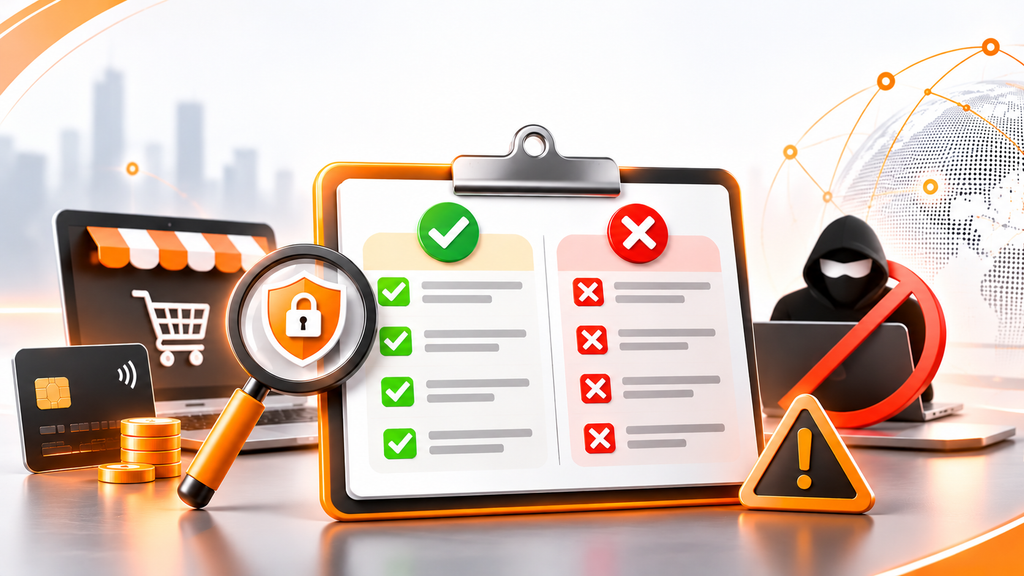
Fraud Tool Evaluation Checklist: What to Expect vs What to Avoid
| What to Expect from Modern Fraud Tools | What to Avoid |
| Real-time, transaction-level risk analysis | Post-transaction or batch-based reviews |
| AI-driven and behavioural intelligence | Static, rule-only systems |
| Risk-based authentication & decisioning | One-size-fits-all security rules |
| Smart routing to optimise approvals | Fixed routing with no risk context |
| Built-in chargeback monitoring & alerts | Manual dispute tracking |
| Seamless customer experience | Excessive checkout friction |
E-commerce Fraud Prevention Checklist- Quick Summary
| Area | Key Controls |
| Checkout & Payments | HTTPS, PCI compliance, tokenisation, CVV validation |
| Customer Authentication | Risk-based OTP, biometrics, selective 3DS |
| Real-Time Monitoring | Behavioural analysis, velocity checks, device fingerprinting |
| Risk Scoring | AI-based scoring, dynamic rules, auto-blocking |
| Chargeback Control | Clear policies, evidence storage, and automated alerts |
| Account Protection | Login controls, CAPTCHA, email & phone verification |
| Refund & Promo Abuse | Refund velocity checks, coupon restrictions |
| Internal Controls | Role-based access, audits, and incident playbooks |
Fraud prevention is no longer just a security requirement. It is a critical driver of trust, revenue protection, and sustainable growth.
As e-commerce fraud continues to evolve, merchants need a structured checklist supported by intelligent, real-time technology.
Vegaah enables e-commerce brands to reduce fraud, control chargebacks, and maintain seamless checkout experiences through smart routing, AI-driven risk controls, and integrated fraud management.
Secure every transaction. Scale with confidence.Talk to Vegaah to strengthen your e-commerce fraud prevention strategy.
FAQs
What forms of fraud commonly impact e-commerce businesses?
The most common types include card-not-present (CNP) fraud, friendly fraud and chargebacks, account takeover (ATO), bot-driven fake orders, and refund or promotion abuse.
How can online stores prevent fraud effectively?
To prevent fraud effectively, online stores should follow a structured e-commerce fraud prevention checklist that includes secure checkout controls, risk-based authentication, real-time transaction monitoring, AI-driven risk scoring, and chargeback management.
What is card-not-present (CNP) fraud?
CNP fraud occurs when stolen card details are used for online transactions where the physical card is not present. It remains one of the leading causes of e-commerce fraud and chargebacks.
How do chargebacks impact e-commerce businesses?
High chargeback ratios can result in revenue loss, increased processing fees, compliance monitoring by card networks, and, in severe cases, suspension of merchant accounts.
What is risk-based authentication in e-commerce?
Risk-based authentication applies additional verification, such as OTP, biometrics, or step-up checks, only when a transaction is deemed high risk, keeping low-risk transactions frictionless.
What should an ecommerce fraud detection checklist include?
An ecommerce fraud detection checklist should cover real-time transaction monitoring, behavioural analysis, velocity and anomaly checks, device fingerprinting, AI-based risk scoring, dynamic rules, and automated chargeback alerts.
What are the best fraud tools for ecommerce?
The best fraud tools for ecommerce offer real-time fraud detection, AI-powered behavioural analytics, smart routing with risk-based decisions, and built-in chargeback management support, without adding unnecessary checkout friction.
How can online stores reduce chargebacks and friendly fraud?
Online stores can reduce chargebacks and friendly fraud with clear refund and cancellation policies, transaction logs and evidence storage, and automated chargeback alerts that allow a quick response within network timelines.