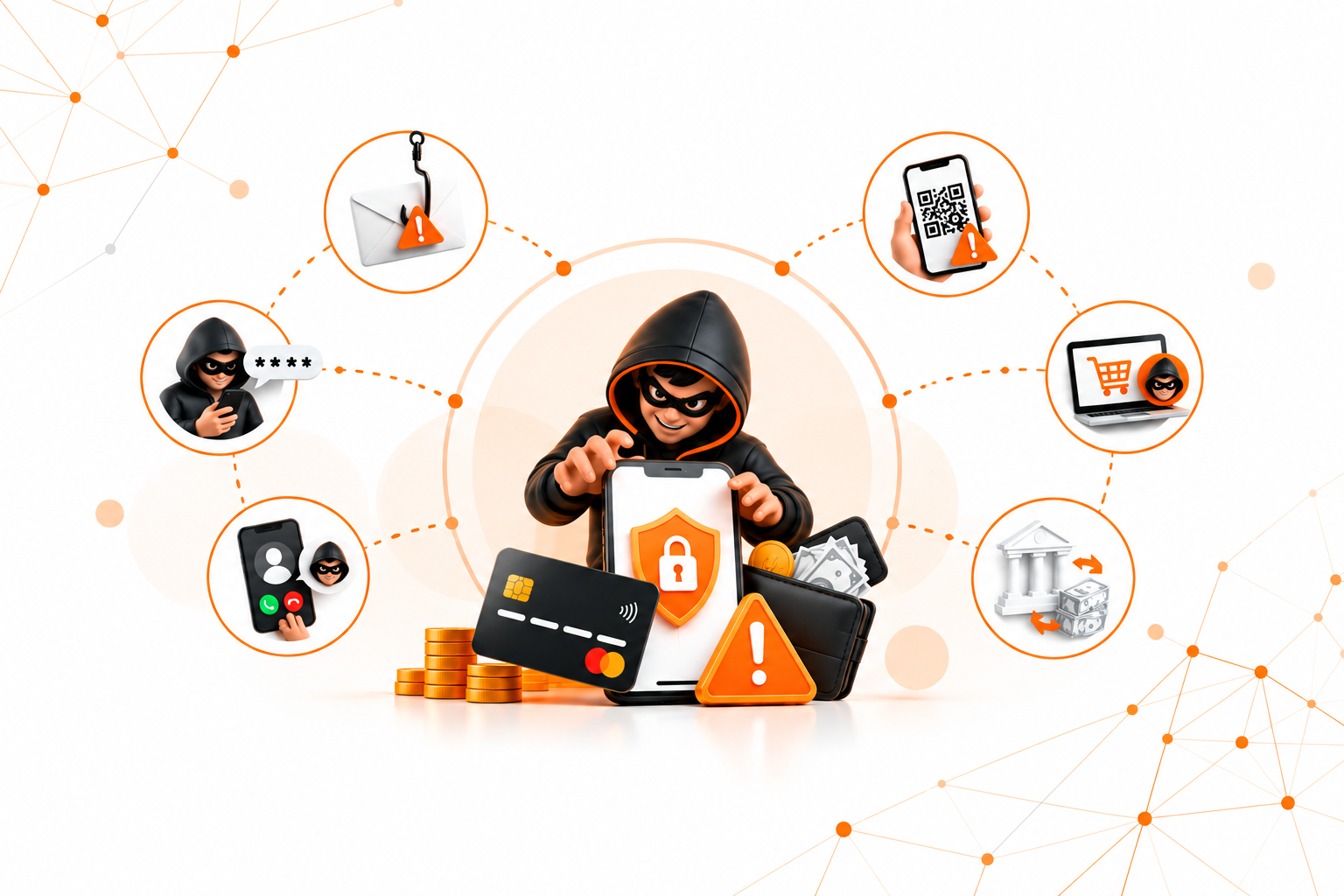
Digital payment fraud is on the rise in 2026. Learn about these payment frauds in detail, how they work, and how to prevent them in this guide.
Over the past year, India has seen a sharp rise in online payment fraud, and it’s no coincidence.
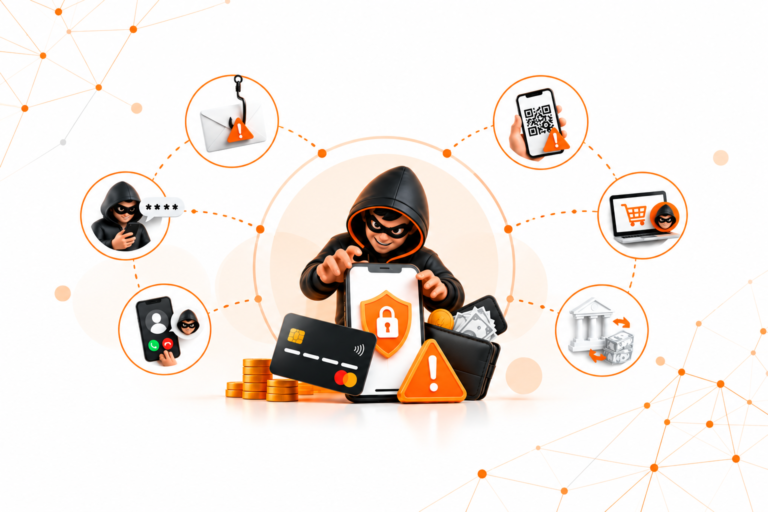
As digital payments become a part of our everyday life, from UPI splits to quick QR scans, the risk of falling victim to digital payment fraud has grown just as fast. The more we tap, scan, and swipe, the more scammers innovate.
With digital transactions hitting new highs month after month, payment fraud in 2026 is shaping up to be more sophisticated than anything we’ve seen before.
That’s exactly why understanding how these scams work is more important than ever.
In this blog, we break down the top digital payment frauds everyone should know, what they look like, how fraudsters pull them off, and how you can stay one step ahead.
Why Digital Payment Fraud Is Rising in India
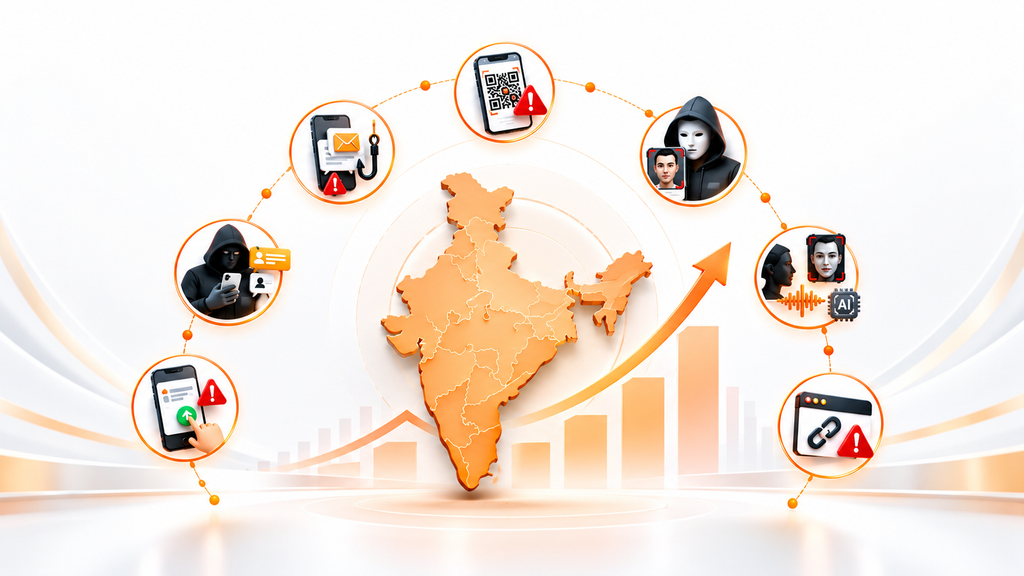
India’s rapid shift toward instant, app-based transactions has transformed the way we pay. But it has also created new openings for digital payment scams, which India is now grappling with.
As real-time payment systems become the norm, scammers are finding ways to exploit the speed and convenience of these platforms.
With money moving in seconds, real-time payment fraud leaves users with almost no reaction time to stop a transaction once it’s triggered.
At the same time, social engineering tactics are evolving. Scammers no longer rely on basic phishing messages; today, they use personalised scripts, emotional triggers, and high-pressure tactics to manipulate users into making mistakes.
Add emerging technologies like voice deepfakes, AI-generated identities, and cloned biometrics, and suddenly, even savvy users can be fooled.
UPI and QR-based payments, while incredibly convenient, are especially targeted.
Fraudsters take advantage of their widespread use and simplicity, tricking users into scanning fake QR codes, approving unintended requests, or clicking malicious payment links.
The result? A landscape where convenience meets vulnerability, and awareness is the strongest defense.
Top Digital Payment Frauds in 2026
Here is a list of digital payment frauds,
UPI Fraud
UPI continues to dominate India’s digital payment landscape, but its popularity is also making it the biggest target for scammers.
UPI fraud remains the most widespread form of digital payment scams India faces today, driven by the speed and simplicity of UPI transactions, one tap, one PIN, and the money is gone.
Recent data highlights how serious the issue has become. According to the National Payments Corporation of India (NPCI) and Reserve Bank of India (RBI) data:
- As of September 2024, India recorded 6.32 lakh UPI fraud cases, resulting in losses of nearly ₹485 crore.
- In FY 2023–24 alone, total losses from all online payment frauds reached a staggering ₹14,570 crore, highlighting how quickly scammers are exploiting the surge in online payments.
- A nationwide survey also found that 1 in 5 UPI users has faced a fraud attempt in the past three years, and surprisingly, 51% of victims never filed a complaint.
Common UPI fraud tactics include fake UPI links, “collect request” scams where users unknowingly approve payments, and remote access tricks using screen-mirroring apps disguised as customer support tools.
Because UPI transactions settle instantly, recovering money is extremely difficult once the transaction is approved.
Staying vigilant, especially about unfamiliar links, requests, or apps, is the best defense against UPI fraud.
QR Code Payment Scam
QR code-based payment methods are incredibly convenient, but that convenience is exactly what makes them a prime target for fraud.
- In India, the number of QR code scam incidents has surged in recent years.
- For instance, during FY 2023-24, nearly 39,638 cases of QR-code fraud were reported, with losses reaching approximately ₹56.34 crore, as per reports.
- And as of September 2024 alone, over 18,000 cases involving about ₹22.22 crore had already been recorded.
- Globally, in 2025 it’s estimated that less than 1% of QR-code transactions were reported as fraudulent, but the number of QR-code phishing (quishing) attacks is climbing sharply.
Most scams occur when fraudsters paste or overlay fake QR codes on shops, taxis, or delivery vehicles, or replace the merchant’s static QR code with one that routes payments to the scammer’s bank account.
Then there’s the question of static vs dynamic QR safety:
- Static QR codes (where the amount is fixed or the payee is fixed) are easier to tamper with.
- Dynamic QR codes (generated per-transaction, with changing data) offer stronger protection when correctly implemented.
In short, when you scan a QR code, what you think is paying a merchant might instead be handing your money to a scammer.
Awareness and checking that the payee details match exactly are your first line of defence against payment fraud.
Phishing Payment Fraud
Phishing, that seemingly harmless email or SMS claiming to be from your bank, has become one of the most common routes for financial scammers.
In the context of digital payment fraud, phishing payment fraud works by tricking users into sharing their credentials, OTPs, or clicking on malicious links that give remote access to their accounts.
Recent figures underline how widespread the threat has become.
In 2024, Indians lost roughly ₹22,842 crore to cyber-fraud and online scams, a nearly three-fold increase from the previous year.
Moreover, overall cyber-fraud incident numbers rose from 10.29 lakh in 2022 to 22.68 lakh in 2024.
In many of these cases, fraudsters used impersonation (bank or payment app), fake alerts, or urgently demanded OTPs to withdraw funds.
Typical tactics include:
- A message saying “Your UPI/Wallet has been frozen, click here” or “Upgrade your payment app immediately”.
- A “bank official” is calling you and asking for OTPs (which you believe is legit).
- Fake login portals that look exactly like your payment app, meant to steal credentials.
Because users often respond quickly, the money moves before they realise. And once the funds are transferred, recovery is extremely difficult.
To stay protected: never share your OTP or login credentials, always check sender details, and verify via official channels if you’re unsure.
Awareness is your first line of defence against this volume-based threat.
Fake Payment Link Scam
One of the sneakiest versions of online payment fraud is the fake payment link scam, where fraudsters trick victims into believing a payment was completed, or prompt them to click a link that appears legitimate but routes funds to a scammer.
In many cases, scammers send a fake “payment successful” screenshot or redirect users to a lookalike payment gateway, and victims let their guard down, thinking the transaction is real.
The problem is more widespread than many realize.
A recent guide for Indian users warns that fake payment scams, ranging from counterfeit confirmations, spoofed transaction notifications, to cloned payment-gateway websites, are part of a growing wave of online payment frauds sweeping across the country.
Meanwhile, overall losses due to payment fraud in India leapt to nearly ₹14,570 crore in FY 2023–24, underscoring how such scams contribute to a massive financial toll.
According to a 2025 report, many people in India lost money after clicking on links claiming to be “payment verification” or “payment confirmation” pages. These messages often arrive via WhatsApp, SMS, or email.
Here’s how a typical fake payment link scam plays out:
- The scammer sends a link (via SMS/WhatsApp/email) claiming to be a payment verification page, or shows a fake “success” screenshot.
- The victim, believing they have already paid (or received payment), releases goods, services, or authorizes further actions.
- In reality, no real transaction occurred, the money goes to the scammer’s account, and the “proof” was just an image or a spoofed page.
Because of how convincing these tricks look, and because many victims rely on screenshots rather than checking their bank/UPI app, fake payment link scams remain one of the hardest to detect until it’s too late.
SIM Swap Fraud
Sim swap fraud works when a criminal manages to get a duplicate SIM or e-SIM issued in your name, giving them control of your phone number, and therefore access to all SMS and OTPs meant for you.
Once they hijack your number, they can reset banking or UPI passwords, approve transactions, and drain your bank or wallet, often before the victim even realizes what’s happened. This type of fraud has surged lately.
In 2025, there have been several high-profile cases: for example, a recent scam in Mumbai involved fraudsters converting a victim’s SIM to an eSIM, and the victim lost nearly ₹11 lakh almost instantly.
Authorities warn that once the SIM is swapped, all security through SMS-based OTPs becomes meaningless.
With digital payments, UPI, and banks all still relying heavily on SMS-OTP for authentication in many cases, SIM-swap fraud remains one of the most dangerous forms of digital payment scams in India.
Account Takeover (ATO) Fraud
Account takeover fraud (ATO) occurs when a scammer gains unauthorized access to a user’s digital wallet, payment app, or bank account. Often, they use leaked credentials, intercepted OTPs, or hijack a phone number.
Once inside, the fraudster can initiate transfers, change account settings, or even redirect funds to mule accounts.
This makes ATO one of the most dangerous forms of digital payment fraud because the attack comes from “within”, disguised as legitimate access.
The scale of the threat is rising sharply.
- Recent global data shows that by early 2025, nearly 2.5 million stolen accounts were listed for sale, meaning credentials are being harvested, bought, and reused in masses.
- Organizations report that 83% faced at least one takeover attack last year, and a significant portion of those breaches bypassed even multi-factor authentication protections.
- In India, ATO and third-party takeover attacks reportedly account for about 55% of all fraud within certain segments of banking and fintech, underscoring how dominant this threat has become in the fraud landscape.
Common tactics used by fraudsters include:
- Credential theft via phishing, data breaches, or reused passwords.
- OTP interception, often via compromised phone number or SIM-swap, to reset passwords and gain full control.
- Fake apps or cloned payment-gateway portals that harvest login data before redirecting to genuine pages.
Because the attacker now appears as a legitimate user, many fraudulent transactions go unnoticed until it’s too late.
Once funds are transferred, recovery becomes extremely difficult.
Biometric Payment Fraud
Biometrics (fingerprint, face ID, voice) are becoming a popular way to authorize payments, but 2026 also marks a rise in biometric payment fraud.
- As the biometric payments market is expected to reach $46.38 billion in 2025, attackers are using equally advanced methods to break it.
- Deepfakes and synthetic identity tools are the biggest threat. Deepfake files globally have grown from about 0.5 million in 2023 to an estimated 8 million in 2025, enabling voice-cloning and face spoofing that can bypass biometric authentication systems.
- Fingerprint cloning kits, AI-generated voice calls, and spoofed facial recognition are already being used to unlock wallets or authorize UPI/AePS payments.
- With Aadhaar-enabled services expanding across India, researchers warn of increased risks of biometric spoofing and data misuse in 2025.
Biometrics make payments fast, but deepfakes, cloned fingerprints, and AI-spoofing prove they aren’t foolproof. As biometric adoption grows, so does fraud.
Use multi-factor authentication wherever possible, and never rely on biometrics alone.
Regularly verify device security, update OS/firmware, and avoid sharing biometric scans online to tackle such digital payment fraud.
AI-Driven Payment Fraud
2026 marks a major shift, scammers now use AI the same way security systems do.
With AI tools generating fake identities, cloned voice calls, and deepfake video verifications, digital impersonation has never been easier.
Fraudsters create AI-generated profiles to open accounts, request payments, or trick support teams into resetting security access.
Deepfake voices are being used to authorize transfers, while synthetic KYC documents are slipping past traditional checks.
As fraud becomes smarter, AI-driven fraud detection is also emerging as the most powerful defense, capable of spotting unusual behavior, device fingerprints, and micro-transaction patterns faster than humans ever could.
If AI can protect, then AI can also deceive.
In such instances, a payment gateway like Vegaah offers AI-driven fraud detection tools for secure transactions. Protection is strongest when it starts early. Get Vegaah’s AI-powered fraud detection today.
Real-Time Payment Fraud
As digital payments go real-time across India, the speed and convenience also give rise to a dangerous breed of scams, real-time payment fraud.
In 2025, reports show that over 24 lakh digital fraud incidents were recorded between April 2024 and January 2025, with losses amounting to ₹4,245 crore, many of which involved instant-payment channels.
One recent survey revealed that over one-third of respondents in India admitted losing money via real-time payments, often to scams promising goods, services, or investments that never materialised.
With real-time payments, a single tap, swipe, or QR scan can move money instantly, and there’s often no reversal time.
That “razor-thin reaction window” means that by the time a user realizes something is wrong, the funds are already gone.
To avoid this,
- Always double-check the recipient’s details before approving a payment, even if it’s just a small amount.
- Enable transaction alerts and review them immediately; spot-check your payment history frequently.
- Avoid saving payment credentials or pre-approving recurring payments without verifying legitimacy.
- Use official apps or trusted gateways only, steer clear of links or payment requests received via unexpected calls/messages.
How Payment Scams Work
Behind almost every digital payment scam sits mindset manipulation, not just technology. Scammers don’t just steal money; they hijack emotions, trust, and decision-making to push victims into acting quickly and without verification.
Here’s how they do it:
| Tactic | What They Do | Why It Works |
| Social Engineering | Study behaviour, target emotions | People trust what sounds familiar or official |
| Fake Urgency | “Your account will be blocked in 30 mins.” | Urgency disables rational judgment |
| Trust Manipulation | Polite tone, official format, fake caller ID | Looks legitimate → lowers suspicion |
| Pretexting | Fake KYC, refund, tax, courier stories | Victims share data believing it’s routine |
| Impersonation | Clone WhatsApp numbers/pose as bank staff | Familiar identity = instant trust |
For example,
- Fake RBI/KYC update calls demanding OTP to “avoid account freeze”.
- Courier delivery scams requesting a ₹10 “verification fee” via UPI.
- WhatsApp messages from cloned family numbers requesting urgent money.
How to Prevent Digital Payment Frauds
With scams evolving faster than ever, staying alert is your strongest layer of protection. Here’s a simple checklist on how to prevent digital payment fraud thatusers should follow:
1. Verify QR Codes Before Scanning
Always check if the QR looks tampered, replaced, or sticker-patched. Confirm the recipient’s name before paying.
2. Never Share OTPs — With Anyone
No bank, payment app, or support staff will ever ask for OTP. If someone does, it’s fraud, full stop.
3. Check URLs Before Clicking
Fake payment links and cloned pages look convincing. Only open links from trusted domains and official apps.
4. Enable Multi-Factor Authentication
Add a second security layer — biometrics, PIN, or device approval, so a leaked password doesn’t equal access.
5. Use Device Security Features
Enable screen lock, app lock, and auto-updates. Avoid installing APKs or unknown remote-access tools.
6. Monitor UPI/SMS Alerts in Real Time
Each notification is an early warning signal. If you see unknown deductions, act immediately.
7. Keep SIM Secure
Lock your SIM with a PIN and never share personal KYC details. SIM-swap attacks start with stolen identity data.
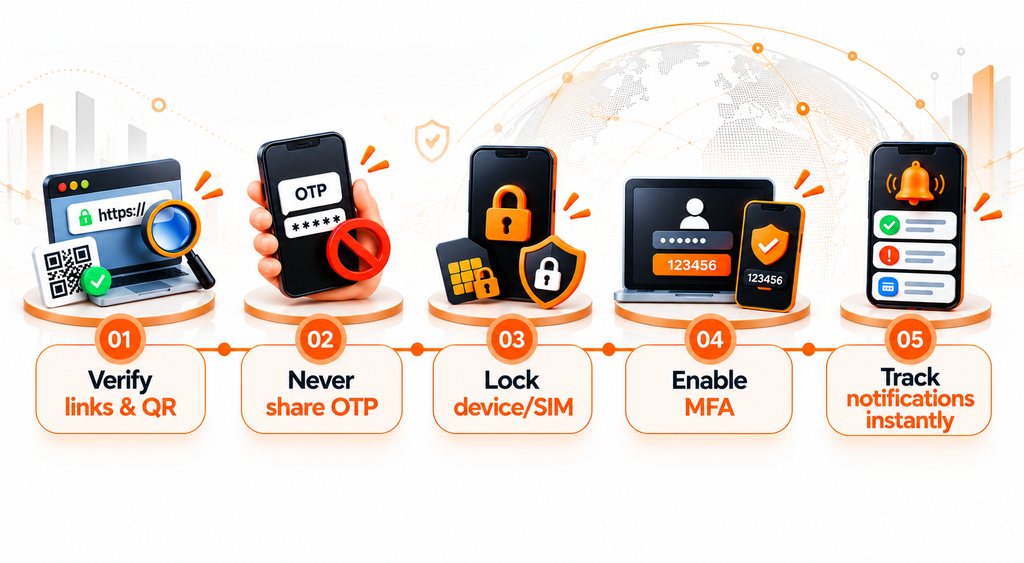
Follow these steps to protect your money from digital payment fraud.
How Merchants Can Fight Online Payment Frauds
While users must stay alert, the battle isn’t theirs alone. Fintech platforms and payment gateways are investing heavily in advanced security infrastructure to reduce fraud before it reaches the customer.
Here’s how the merchant can fight online payment fraud:
AI/ML-Based Transaction Monitoring
Modern fraud engines track thousands of data points in real time, including device ID, login behaviour, transaction velocity, location mismatch, and spending habits.
AI models learn patterns and flag anomalies instantly, blocking suspicious transfers before they go through. Integrating such modules in the payment ecosystem will help businesses in payment fraud prevention.
Early Warning Alerts
Instead of simply notifying customers, payment gateways help merchants detect risk early by triggering real-time alerts for suspicious activity, like abnormal transaction velocity, mismatched device IDs, unexpected high-value payments, login attempts from new locations, or sudden password resets.
These alerts allow merchants to review, challenge, or temporarily hold the transaction before the fraud completes, reducing chargebacks, losses, and dispute overhead.
In short, the goal isn’t just to inform, but to intervene.
Gateways act as an early warning layer, helping businesses catch fraud signals at the source rather than after money leaves the system.
Risk Scoring for Every Transaction
Payment gateways assign a real-time risk score to every transaction using behaviour patterns, device fingerprinting, location, and KYC strength.
If the score indicates suspicious intent, the payment is either auto-blocked or challenged with extra verification.
This helps merchants stop fraud before money leaves the account.
Fewer fraudulent approvals = fewer chargebacks, fewer losses, safer business.
Real-Time Fraud Detection
Modern systems no longer detect fraud after the loss; they intercept it in motion.
Real-time monitoring can pause or flag suspicious transactions instantly.
Risky payments are challenged with step-up authentication like OTP, PIN, biometrics, or device verification.
This prevents fraud before settlement, not after recovery attempts.
Tokenisation for Safer Credentials
Gateways use tokenisation to replace card numbers, UPI IDs, and bank details with encrypted tokens during transactions, meaning merchants never handle raw financial data.
Even if intercepted, these tokens cannot be used for fraudulent payments.
This drastically reduces PCI exposure, data-theft risk, and compliance burden for merchants.
In short, tokenisation lets businesses accept payments safely, even in high-volume environments.
Closing Insights
Digital payments in India are accelerating, and so are the threats that surround them.
From UPI and QR-code scams to deepfake biometrics and instant settlement fraud, this year demands more than awareness. It demands active, intelligent protection.
That’s where Vegaah comes in.
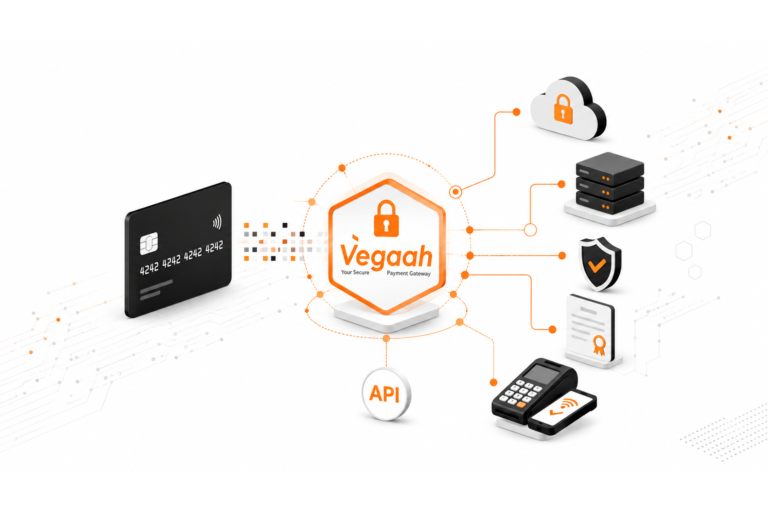
Vegaah uses AI-driven fraud detection, device intelligence, and real-time alerts to spot suspicious activity the moment it begins.
Every transaction is scored instantly, and high-risk sessions can be challenged, paused, or blocked before money moves. Fraud isn’t just detected, it’s stopped mid-transaction.
With anomaly detection, early fraud warnings, tokenisation, and real-time interception, Vegaah’s fraud detection tool acts as a security layer between merchants and scammers, reducing exposure, chargebacks, and financial loss.
As users, we must stay mindful while paying.
As businesses, we must deploy technology that protects every rupee.
Vegaah does exactly that.
Integrate Vegaah. Strengthen your payment with a security shield.
Make every transaction fraud-resistant.
FAQs
What is digital payment fraud?
Digital payment fraud refers to scams where attackers trick or deceive users to steal money through UPI, QR codes, payment links, fake identities, SIM swap, or account takeovers. It includes both technical hacks and psychological manipulation
How do UPI frauds typically happen?
UPI fraud usually involves fake links, payment requests, or remote-access apps. Scammers trick users into entering PINs or approving transactions, which instantly transfers money to the fraudster.
How can I verify if a payment link or screenshot is real?
Always check payment status directly inside your banking or UPI app, never trust screenshots, messages, or links shared by others. If unsure, call the official support number, not the one in the message.
How do deepfakes or biometric fraud happen?
Fraudsters use AI to clone fingerprints, faces, and voice patterns — tricking biometric authentication systems. As deepfake files surge into the millions, biometric spoofing has become a new-age threat.
Can merchants protect themselves better than customers?
Yes, by using AI fraud engines, risk scoring, transaction velocity checks, 2FA for high-value transfers, and tools that block suspicious patterns instantly.
Which fraud type is most common in India currently?
UPI fraud leads significantly, followed by QR scams, phishing links, and instant payment fraud. SIM swap and biometric spoofing are rising fast in 2026.